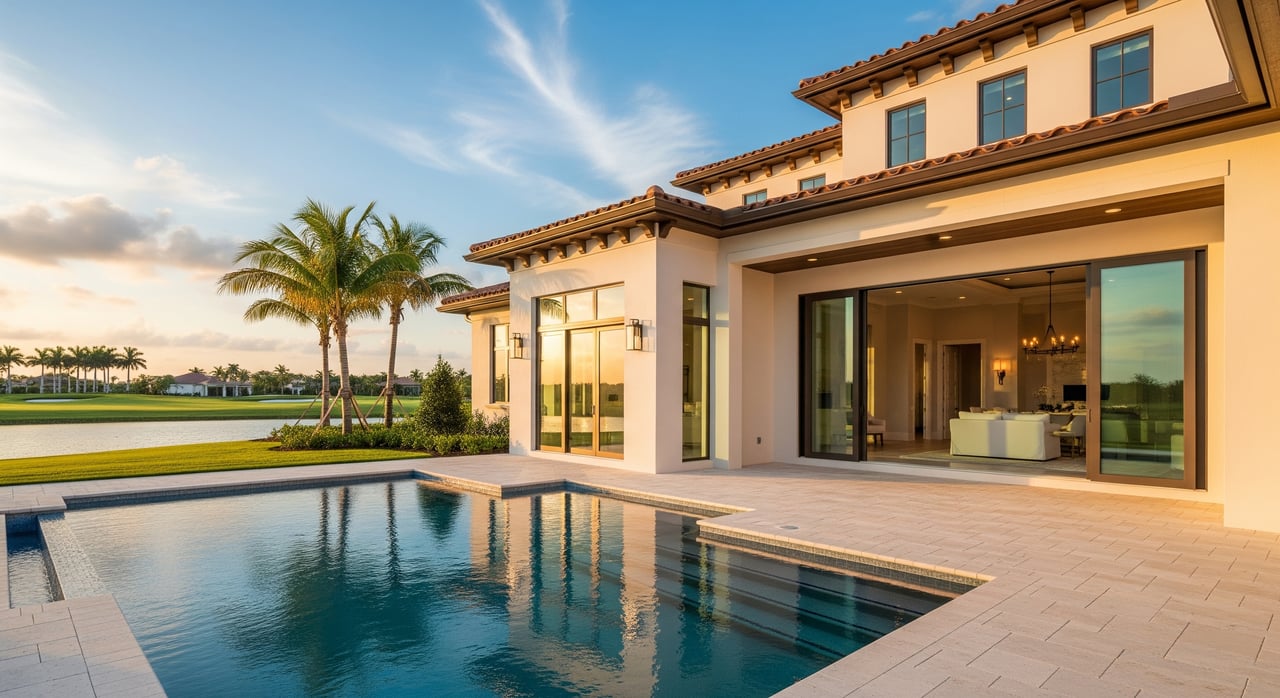
Thinking about building in Talis Park but unsure how long it really takes? You are not alone. Between community approvals, Collier County permits, and the pace of custom construction, the process can feel complex if you are planning from a distance. This guide breaks the timeline into clear phases, shows where delays happen, and gives you a practical plan to stay on schedule. Let’s dive in.
Your Talis Park build timeline at a glance
If you are pursuing a custom or semi-custom home in Talis Park, plan for a longer runway than a standard production build. A realistic framework looks like this:
- Pre-construction planning and ARB: typically 3 to 6 months for semi-custom; 4 to 8+ months for fully custom.
- County permitting: 1 to 6 months depending on completeness and reviews.
- Construction through Certificate of Occupancy: 9 to 18 months for a custom luxury build.
- Overall range from lot contract to CO: commonly 12 to 24 months, with variability based on plan complexity, weather, and change orders.
Step-by-step phases and timing
Lot due diligence and closing (2 to 8 weeks)
Before you close on a homesite, confirm the basics. Typical tasks include title review, survey, and a check of restrictive covenants and easements. You should also verify utility availability, request soil or geotechnical input if needed, and review Talis Park HOA and ARB rules. If you are financing, expect lender requirements and contingency negotiations to affect timing.
Schematic design and builder selection (4 to 12 weeks)
Choose a builder and architect with recent Collier County experience. You will confirm a floor plan or begin a custom design, develop a preliminary site plan with setbacks and driveway layout, and outline a budget and allowances. This is the right time to finalize the builder contract so expectations and cost controls are clear.
Design development and permit-ready documents (8 to 20 weeks)
Your team will complete architectural plans, structural engineering, and MEP drawings, along with energy code worksheets and HVAC calculations. Expect a full site plan and landscape plan plus the formal ARB submission package. Custom luxury homes tend to sit on the longer end of this window.
HOA/ARB approvals in Talis Park (2 to 8+ weeks)
Many luxury communities require ARB approval before you submit to the county. In Talis Park, anticipate detailed design standards for materials, roof forms, color palettes, and landscaping. Some communities require construction deposits, staging plans, and gate access coordination. Build in time for comments and revisions.
County and regional permitting (4 to 24+ weeks)
Collier County will review your building permit for architectural, structural, mechanical, electrical, plumbing, civil, stormwater, and environmental compliance. Depending on your design, other agencies may review drainage or water management. Timelines vary based on submittal completeness, project complexity, and reviewer workload.
Site work and foundation (2 to 8 weeks)
Once permits are in hand, construction starts with clearing, grading, and erosion controls. The team installs stormwater features as required, then forms and pours the foundation. Each stage includes inspections and, if specified, third-party tests like soil compaction and concrete cylinder breaks.
Shell, framing, and rough-ins (8 to 16 weeks)
Expect framing, roofing, and rough electrical, plumbing, and mechanical work. Inspections confirm each system before it is concealed. Progress during this stage is highly visible and sets the pace for everything that follows.
Exterior, systems, and interior finishes (12 to 28 weeks)
Windows and doors, exterior cladding, insulation, and drywall usually come next, followed by finishes like cabinetry, millwork, tile, flooring, and fixtures. Luxury selections often carry longer lead times, so early ordering keeps this phase on track.
Finals, punch list, and Certificate of Occupancy (2 to 6 weeks)
After mechanical, electrical, plumbing, and building finals, the county issues a Certificate of Occupancy. In limited cases, a Temporary CO may be possible if only non-critical items remain. Expect a punch list period to wrap remaining details before move-in.
Collier County and community approvals
Who governs what in Talis Park
Talis Park sits in unincorporated Collier County. County codes and permitting apply, and your plans must also meet all HOA and ARB design standards. Confirm the correct ARB process for your specific lot and obtain written approval for all exterior elements.
Stormwater, floodplain, and environmental items
Collier County enforces stormwater and drainage rules, which usually require a stormwater management plan and erosion controls during construction. If regional review is needed, agencies may evaluate your drainage design. Check FEMA flood maps and local elevation standards, and plan for elevation certificates if the lot is in a Special Flood Hazard Area. Tree protection and wetland rules can affect clearing and may require permits or mitigation.
Utilities and taps
Verify potable water and sewer connections through the county or authorized providers. Confirm meter availability, tap fees, and scheduling for tie-ins. Landscaping and irrigation may have separate approvals and water-use requirements, so align your landscape plan with community guidelines.
Inspections and occupancy
The county will schedule inspections at defined stages, from erosion control and foundations to rough and finals. Once all required finals are approved, the county issues a CO. A Temporary CO can be considered in limited situations if remaining items do not affect life safety.
Common delays in Collier County and how to prevent them
- Incomplete permit submittals: The most common cause of delays. Prevent this by submitting complete drawings, engineering, energy forms, and ARB approval documentation.
- ARB iterations: Design revisions in luxury communities are normal. Reduce cycles by hiring a team familiar with Talis Park standards and by submitting a complete, coordinated packet.
- Engineering changes: Structural or drainage revisions can trigger re-submittals. Push for early soils input and civil coordination to avoid late-stage changes.
- Utility scheduling: Meter and tap availability can bottleneck. Confirm requirements and schedule tie-ins early in the permit process.
- Environmental and tree rules: Some removals or grading may be limited by season or require mitigation. Address these requirements during design and include them in the schedule.
- Inspection backlogs: Seasonal swings and staffing can affect scheduling. Maintain a tight communication loop with your builder to lock in inspection dates as early as possible.
- Material and subcontractor lead times: Custom windows, appliances, and specialty finishes often require longer lead times. Place orders early and tie them to your draw schedule.
- Weather and hurricane season: Wet season and storm events can slow work. Plan buffer time in earthwork and shell phases and use durable, code-compliant assemblies.
- Change orders: Post-contract changes are a top risk to both cost and schedule. Freeze design decisions early and use a documented change process with clear pricing and time impacts.
- Financing and draw delays: Construction loans require inspections and lien releases. Align draws with objective milestones and ensure paperwork is complete to avoid funding gaps.
Remote buyer milestone management
Build the right team and contract
- Select a Collier County builder with recent Talis Park experience and a verifiable license and references.
- Engage a local architect and civil engineer familiar with community standards and county reviewers.
- Use a clear construction contract with scope, milestones, payment schedule, allowances, change order procedures, warranty terms, and dispute resolution.
- Confirm the builder’s insurance and any requirements to name the HOA as additional insured.
Document and verify approvals
- Obtain written ARB approval for all exterior elements and confirm any deposits or completion deadlines.
- Submit county permits only after drawings are complete and ARB pre-approval is secured when required.
- Track permit application numbers and reviewer comments, and confirm a single point of contact at the builder and architect for follow-up.
Communication cadence and virtual oversight
- Establish weekly written updates that summarize progress, upcoming inspections, and issues.
- Request standardized photo and video packages at milestones: site prep and foundation, framing, pre-drywall, pre-paint, and final.
- Plan at least three owner visits: foundation pour and inspection, pre-drywall, and pre-final walkthrough. If travel is difficult, send a trusted representative or third-party inspector.
- Use a shared cloud folder for plans, permits, inspection reports, photos, invoices, and payment records.
Independent inspections and quality control
- Hire a third-party inspector at the foundation, pre-drywall, and final stages to verify code compliance and workmanship.
- Request copies of all test reports, including compaction, concrete strength, and pressure tests.
Financing and long-lead controls
- Tie lender draws to objective milestones and independent inspection signoffs with lien waivers.
- Lock selections for long-lead items early and obtain written lead times.
Closeout and handoff
- Collect as-built plans, product manuals, appliance warranties, and all warranty documents.
- Produce a punch list and confirm a reasonable completion window.
- Verify transfer or release of any community landscape or irrigation deposits if applicable.
Quick checklist by milestone
- Due diligence: survey, title commitment, HOA and ARB guidelines, FEMA flood zone map, prior plans if available.
- Pre-permit: ARB pre-approval, utility confirmations, soils report if needed.
- Permit: permit numbers, review timelines, contractor registration status.
- Foundation: compaction report, foundation inspection signoffs, test results.
- Pre-drywall: full photo and video walkthrough, third-party inspection report.
- Mechanical and finishes: documentation of insulation, HVAC balancing, and plumbing tests.
- Final: signed final inspections, CO, recorded warranties, as-builts, and lien waivers.
Budgeting for fees and impact charges
Collier County assesses development and impact fees for items such as roads, schools, parks, and utilities. Fee schedules change, and payment timing can vary by permit phase. Confirm the current schedule and procedures during budgeting and coordinate with your builder and lender so fees are accounted for ahead of permit issuance or pickup.
Realistic expectations for Talis Park
For most custom luxury homes in Talis Park, a 12 to 24 month total timeline is common from lot contract to CO. Semi-custom or spec builds can be shorter, often in the 9 to 15 month range once permits are in place. Your actual timing depends on plan completeness, ARB cycles, permit queues, weather, and how well your team manages change orders and procurement.
Ready to plan your build?
If you want a valuation-informed, construction-savvy partner to help you navigate Talis Park and Collier County, you are in the right place. As a broker associate and state-certified appraiser with hands-on new-construction experience, Jeff can help you select the right lot, structure a realistic schedule, and manage milestones remotely with confidence. Start a private conversation with Jeffrey P Tiefenbach PA to map your plan.
FAQs
How long does permit approval take in Collier County?
- Permit timing ranges from 4 to 24 weeks depending on completeness, plan complexity, engineering needs, and reviewer backlog.
Does Talis Park ARB approval come before county permits?
- In many luxury communities, ARB approval is required before county submittal. Build time in for ARB packet preparation and potential iterations.
Can I get a Temporary Certificate of Occupancy if I need to move in?
- Possibly, in limited circumstances when only non-life safety items remain. Confirm current county policies with your builder before relying on a TCO.
Do I need flood insurance or an elevation certificate in Talis Park?
- If your lot is in a FEMA Special Flood Hazard Area, lenders will require flood insurance and likely an elevation certificate. Even outside mapped zones, many lenders still recommend coverage.
Who pays impact fees and utility taps for new construction?
- Impact and utility fees are typically paid by the owner or builder before final permit issuance or at pickup. Verify current fees and timing during budgeting.
How often should I visit the site if I live out of state?
- Aim for three key visits: foundation, pre-drywall, and pre-final walkthrough. With strong reporting and third-party inspections, you can manage the rest remotely.